
If you're stuck on your main argument, or can't see how the pieces of your manuscript fit together, try working on your titles. A manuscript title can help you find your main argument, and chapter and section titles can show you how the sub-arguments fit together. To get the most out of this exercise, try approaching titles a bit differently than you normally do.
Academic titles often name a topic instead of making a claim
Humanities folks, you know the formula: a cutesy title (possibly alliterative), a colon, then a subtitle listing the topics covered. Here's one from a recent journal issue:
"Beyond the Threshold: The Political Significance of Home in Arendt, Young, and Modern Discourse" (Brennan, 2026)
This title is indexable, meaning it contains a list of key topics that help readers find the article. But it doesn't tell us the argument. The abstract does hint at one: "domestic experiences fundamentally shape political consciousness." What if that were the title? Even if it never becomes the published title, you would know that every section must show readers how domestic experiences shape political consciousness.
Social scientists have a parallel formula: list the topics, then announce the research design in a subtitle. For example,
"Income inequality, organized labor, & ecological disempowerment: A cross-national assessment" (Cloyes et al., 2026)
Again, this title serves a purpose. People researching any of those topics can find the article. But it doesn't report what the authors found. The abstract does: "higher country-level income inequality is associated with greater average feelings of ecological disempowerment," and "respondent-level income, education, and union membership reduce feelings of disempowerment." Each of those states what is happening with the phenomena…and they sound something like newspaper headlines.
Borrow the headline's grammar, not its drama
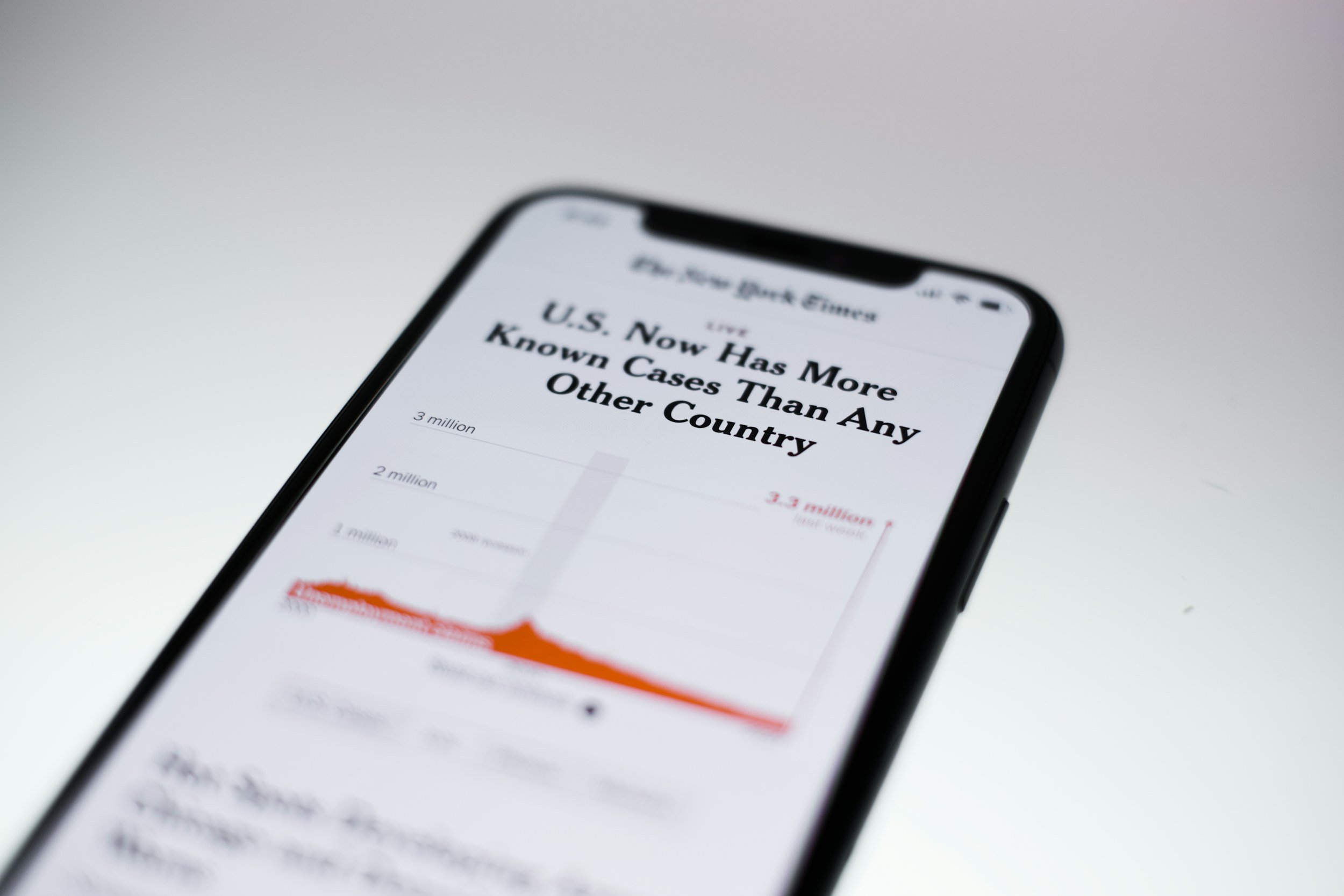
For this exercise, you get to think like a journalist. Here is the New York Times headline from July 21, 1969:
MEN WALK ON MOON
That is a complete sentence. It has a subject ("men"), a verb ("walk"), and a bonus prepositional phrase ("on moon"). In four words, we know who, what, and where.
I'm not suggesting you be sensational. What you're borrowing is the structure: a subject doing something. The subject doesn't have to be a person. It can be a place or a thing, as in this opinion piece title from the Chronicle of Higher Education: "Teaching Evaluations Are Undermining Academic Integrity" (Rao, 2026). That title is the argument of the piece.
Match your verb to your evidence
Your verb should be as strong as your evidence, and no stronger. The cross-national study above reports associations, so a headline claiming "Inequality Deepens Ecological Disempowerment" would claim more than the design can support. A better fit might be "Inequality Tracks With Ecological Disempowerment." Qualitative and theoretical work, likewise, must match the strength of the claim to the analysis of the evidence. Verbs like "shapes," "reveals," "obscures," and "justifies" each promise something different. Choosing the verb forces you to decide how much you are actually claiming.
Try it: from topic list to headline
Write your main claim as a headline. Use a subject, an active verb, and an object or complement. Aim for around four to ten words.
Check the verb. Does it match what your evidence can show?
Do the same for each chapter or section. Each headline should state the sub-claim that section proves.
Read the section headlines in order. Together they should build the case for your main headline.
Look for misfits. A section whose headline doesn't support the main claim may be unnecessary. Two sections whose headlines are out of logical order may need to swap places.
Your final published title may still need a topic-rich version so readers can find your work, and that's fine. The headline version is a working tool. Once you know what you're claiming and how the pieces support it, you can decide how to present it for publication.
References
Brennan, D. (2026). Beyond the threshold: The political significance of home in Arendt, Young, and modern discourse. Angelaki, 31(5), 65–78. https://doi.org/10.1080/0969725X.2026.2737027
Cloyes, K., Roberts, A., Fostervold, C., & Forsythe, R. (2026). Income inequality, organized labor, & ecological disempowerment: A cross-national assessment. Environmental Sociology, 1–19. https://doi.org/10.1080/23251042.2026.2758645
Rao, M. (2026, April 24). Teaching evaluations are undermining academic integrity. The Chronicle of Higher Education. https://www.chronicle.com/article/teaching-evaluations-are-undermining-academic-integrity